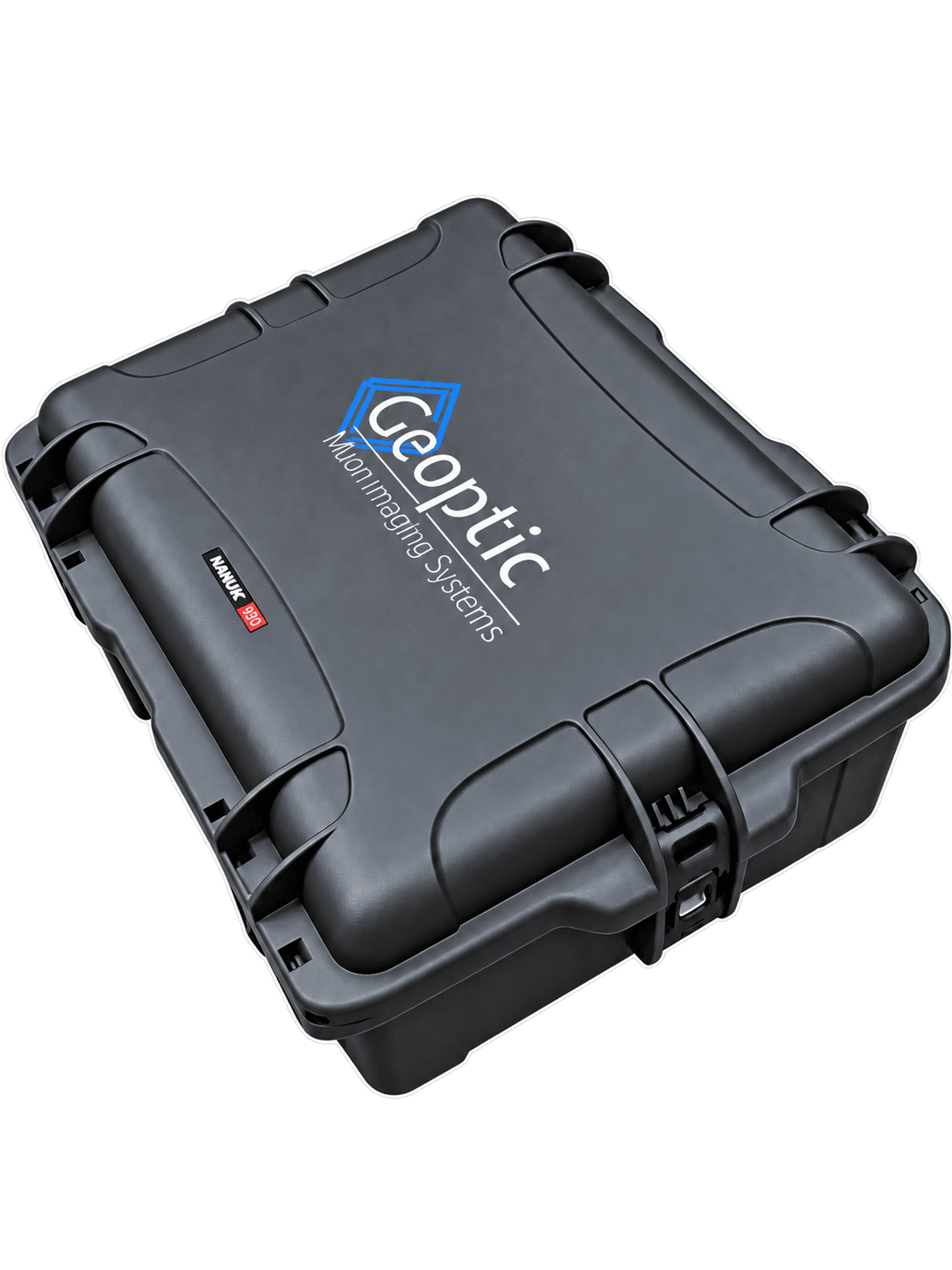
Rugged
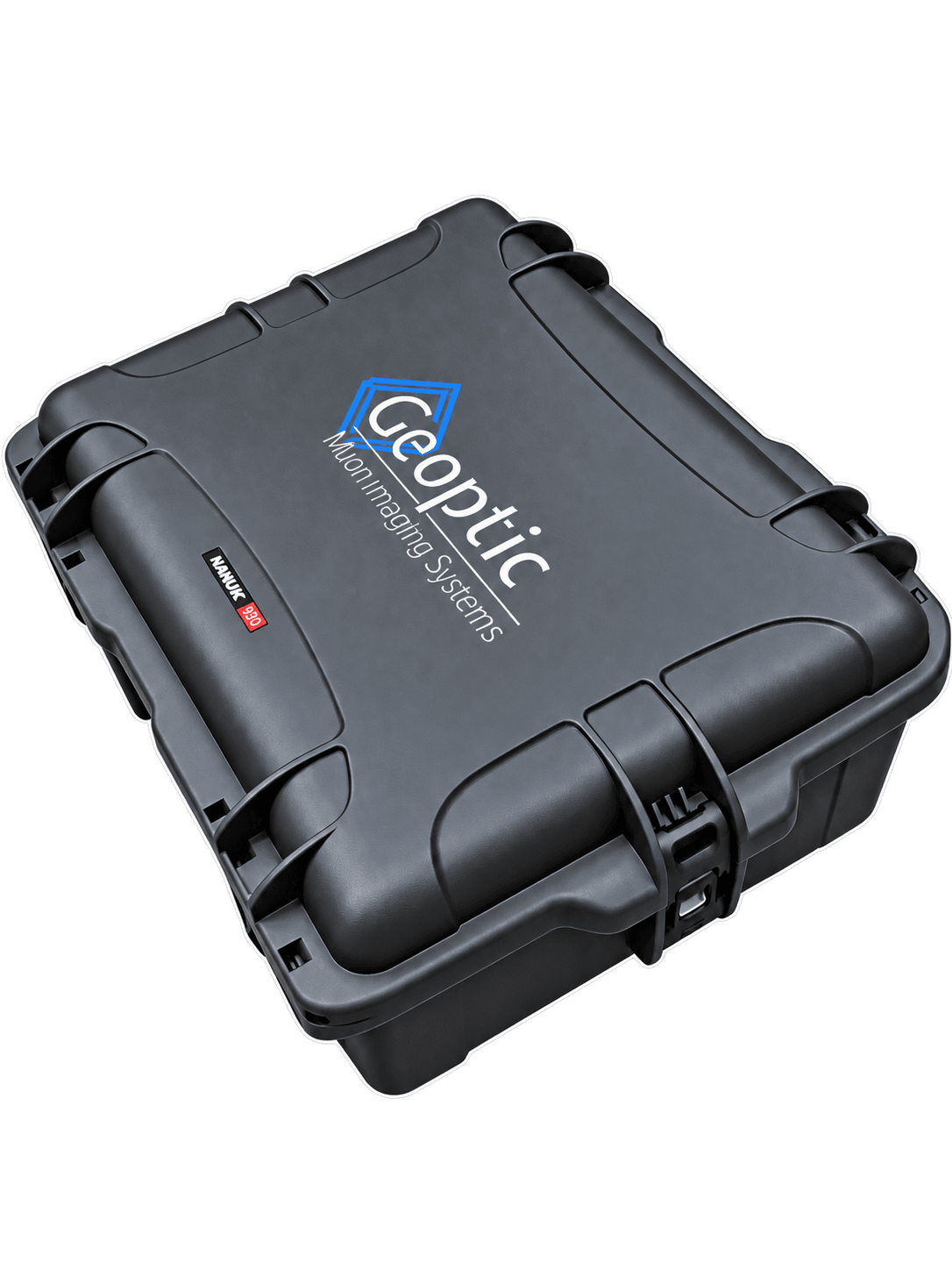
The imager is designed for use in challenging field environments.

GEOPTIC / COMPACT HIGH-RESOLUTION DETECTOR
| Application area | Potential capability alignment |
|---|---|
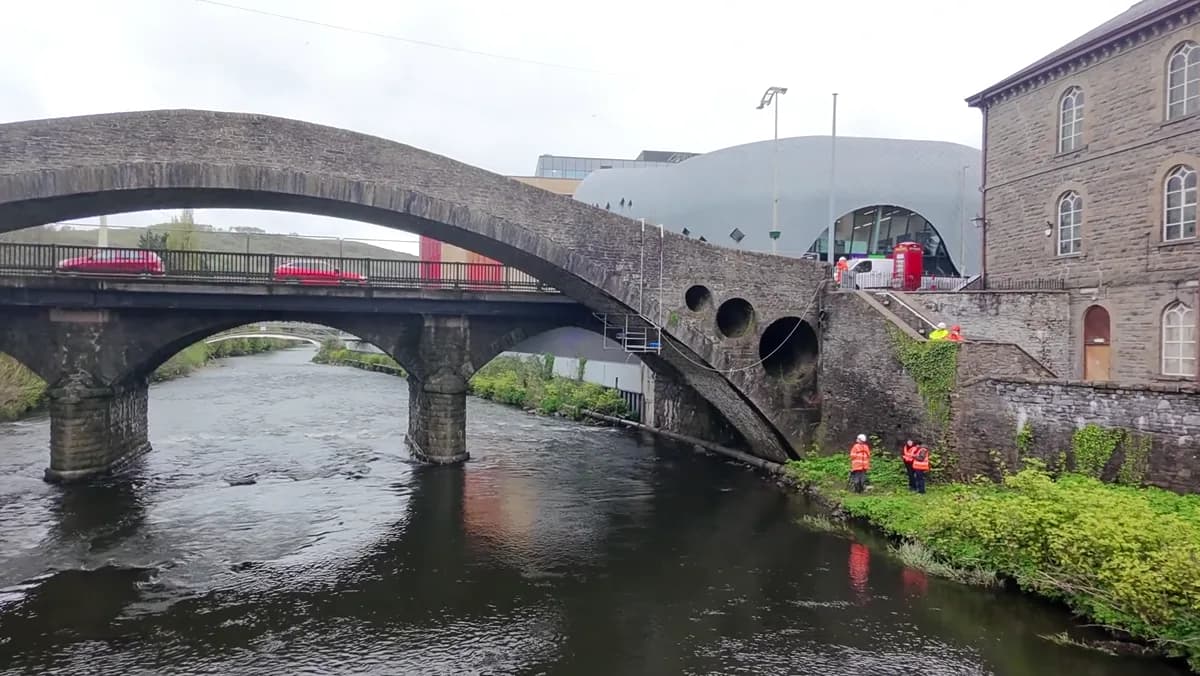
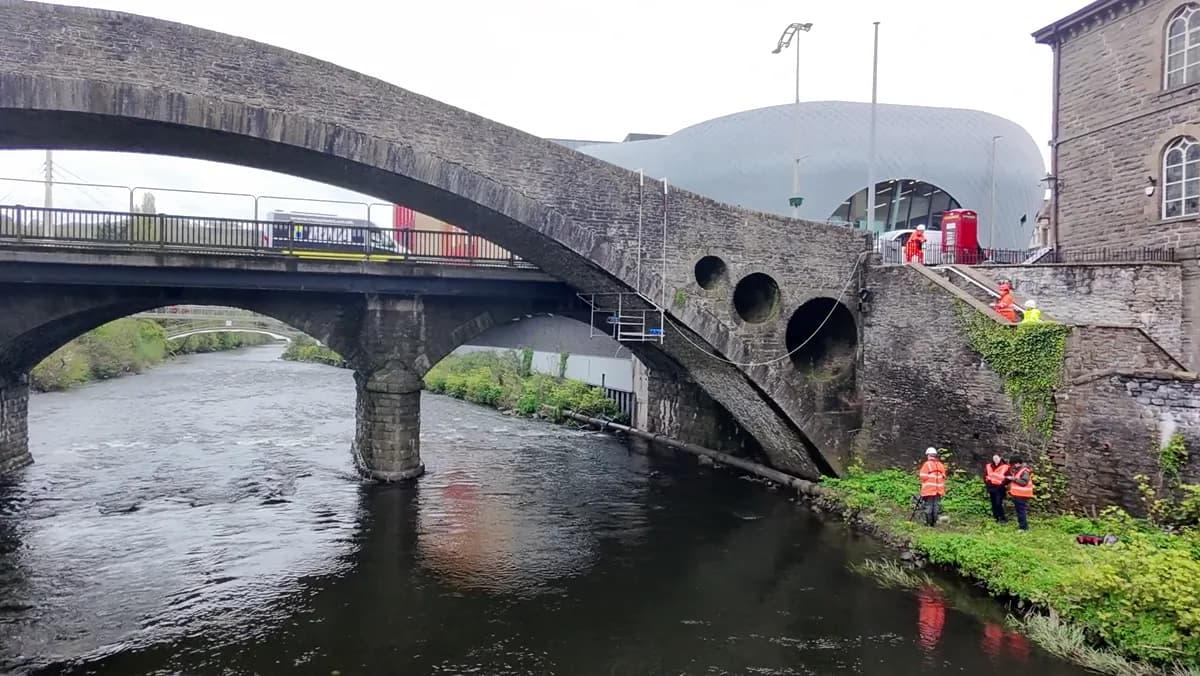
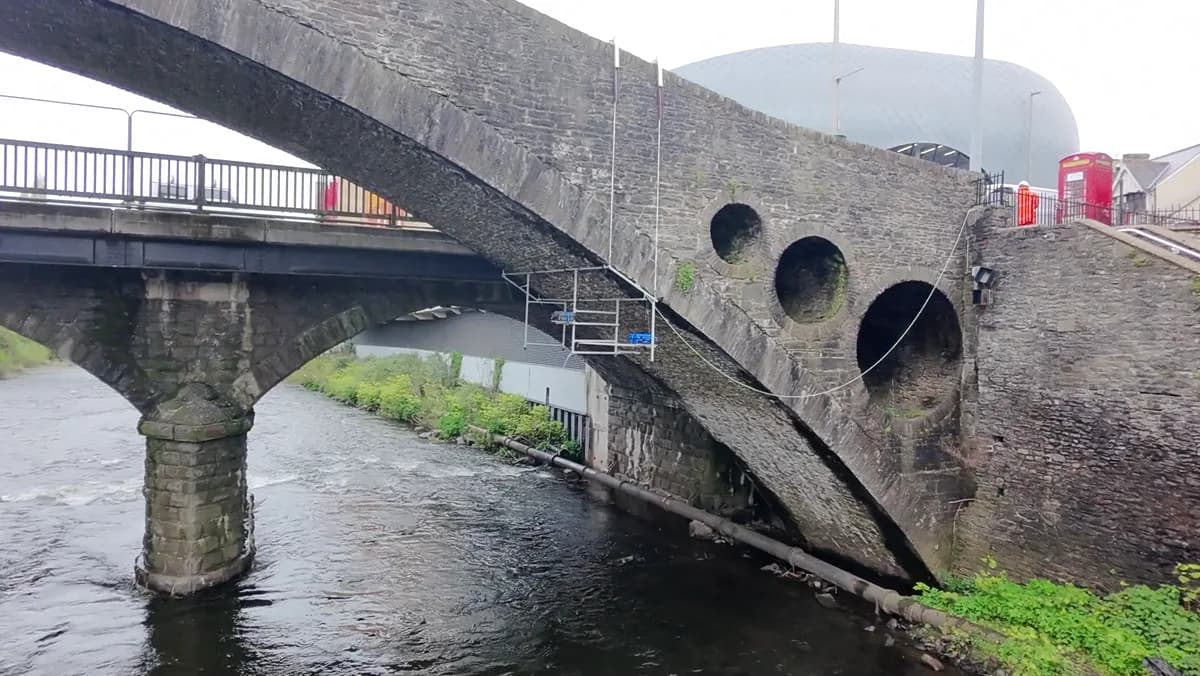
| Bridge infrastructure | Substantial masonry, approaches and hard-to-inspect regions |
| Underground assets | Accessible tunnels, culverts and chambers |
| Protected structures | Constrained spaces beside substantial material |
| Change over time | Repeat density measurements from suitable fixed positions |
William Edwards Bridge, Pontypridd — civil infrastructure imagery from Geoptic’s bridge project materials.
Muon imaging systems
A compact, modular detector for detailed density measurements in confined environments.
| Size | 391 mm × 307 mm footprint |
|---|---|
| Weight | 3 kg |
This compact muon imaging system is engineered for high-resolution density measurements in challenging field environments, with a form factor optimized for deployment in constrained spaces such as tunnels, mines, and smaller access areas. The detector operates passively using naturally occurring cosmic muons, enabling non-invasive, continuous monitoring of subsurface features without disrupting surrounding operations.
Critically, the system is designed for modular deployment. Single units can be used for targeted, high-resolution imaging of localized structures or anomalies. For broader coverage or volumetric imaging, multiple detectors can be arranged in flexible arrays, or combined into larger units to effectively form a larger active area—scaling the field of view while preserving spatial resolution. This modular approach allows users to tailor deployments based on site-specific geometries, resolution requirements, and data acquisition timelines.
To streamline field operations, the system is supported by a dedicated application for detector control, data acquisition, and status monitoring. The app provides a user-friendly interface for configuring detector parameters, initiating data runs, and viewing real-time system diagnostics—including trigger rates, environmental conditions, and detector health. Data is logged locally and can be wirelessly transferred for post-processing or uploaded to a centralized server for integration with imaging software. This mobile interface enables rapid deployment and remote operation, reducing the need for onsite computing resources and simplifying multi-detector coordination, especially in modular or distributed array configurations.
Data from these configurations can be integrated into a unified reconstruction framework, supporting tomographic inversion to resolve voids, material inhomogeneities, and density changes in rock masses, concrete, or composite structures. The system’s rugged design, low power requirements, and field-portable architecture make it well suited for mining and civil engineering environments, where access limitations and operational constraints often preclude traditional geophysical techniques.
By combining scalability, precision, and operational flexibility, this muon imaging platform offers a practical and scientifically robust solution for structural diagnostics, hazard detection, and resource characterization across a wide range of engineering contexts.
The imager is designed for use in challenging field environments.
The Prism imager can be positioned beside or around the target volume to capture the region of interest.
The system can be scaled by adding detectors to the network to increase measurement speed and shorten acquisition time.