
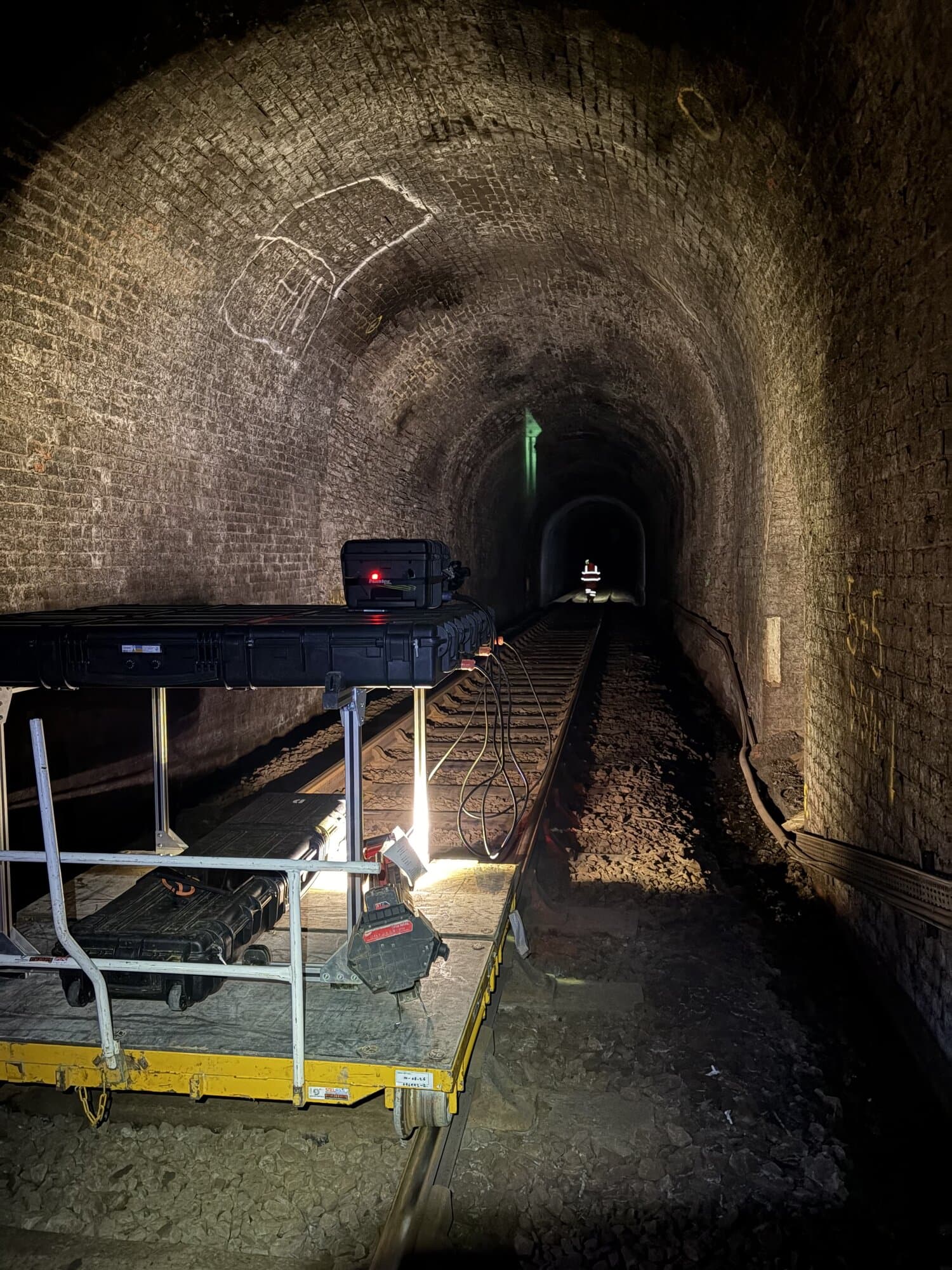
Geoptic delivered the Pen-y-bont Tunnel field campaign between 6 and 8 August 2026. The team deployed both Atlas large area muon imaging systems to complete the planned survey and carried out thorough quality checks on the recorded data before moving into analysis and reporting.
Muon detectors record naturally occurring cosmic-ray muons after they pass through the ground and structure above a tunnel. Changes in the measured rate can reveal density variations in the overburden without drilling.
Planning around the tunnel
Before fieldwork, the team set the detector positions and defined the measurements needed at each position. Tunnel access, possession time and equipment performance can limit the time available on site, so the team planned for adjustments while keeping the survey objective in view.
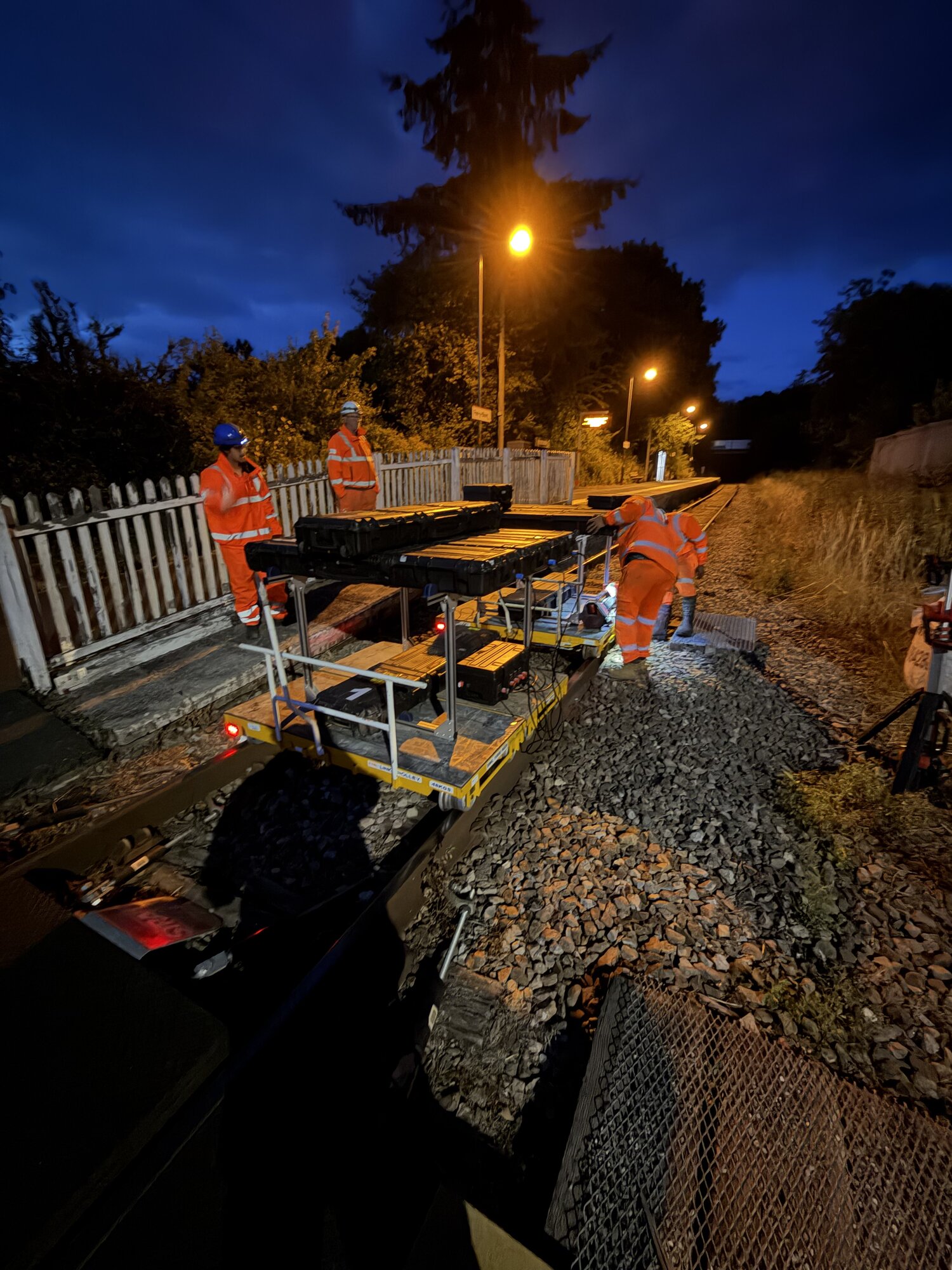
An additional detector system increased measurement capacity and helped the team collect the required measurements within the available survey window.
Checking time as well as position
When several detector systems contribute to one campaign, analysts need accurate timestamps to match event records to the correct acquisition periods.
During data validation, the team found a timing discrepancy in one system. It reviewed the available records and corrected the data-validation issue before analysis. For future fieldwork, Geoptic will check detector clocks independently and record manual event times as a separate reference.
Validation Before Analysis
Before analysis, the team checks detector status, measurement periods and supporting field records. These checks leave time to investigate unexpected results while the issue can still be reviewed.
The Pen-y-bont Tunnel campaign was delivered successfully and then passed into the next project stages. Its field lessons are now part of the working method Geoptic applies to later tunnel surveys.
If you need density information about the ground above a tunnel without drilling, talk to Geoptic about a feasibility assessment.