
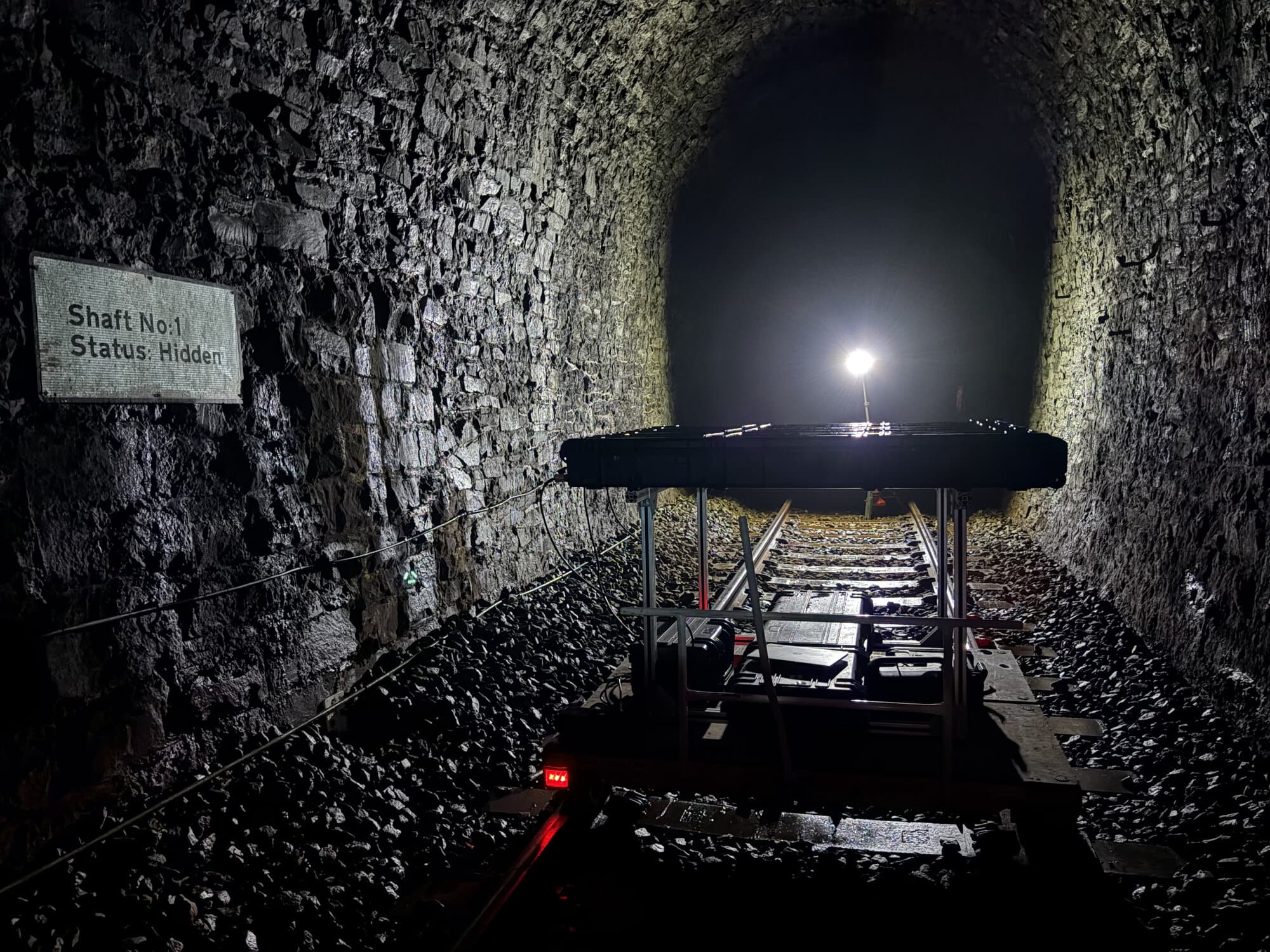
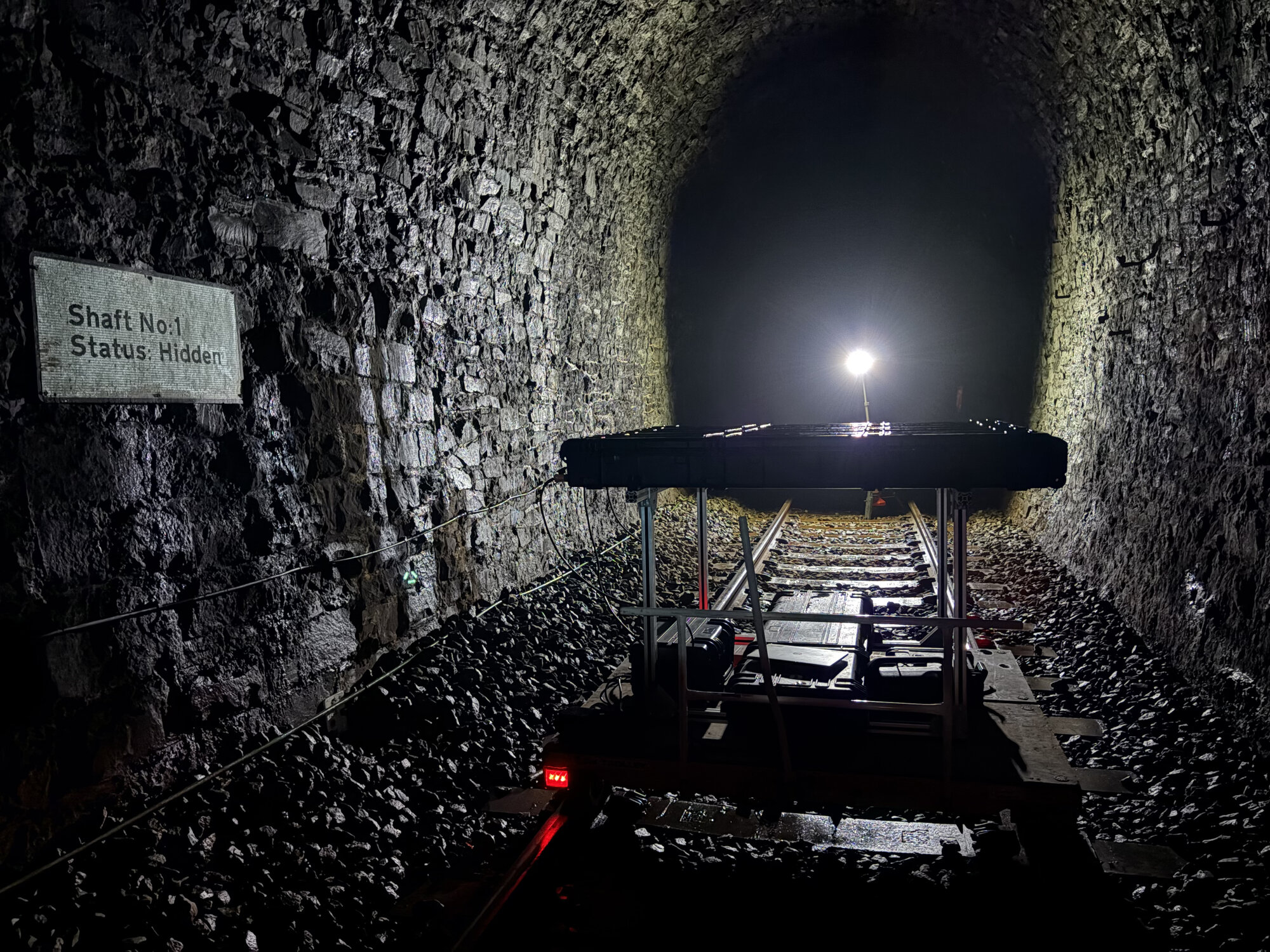
Geoptic completed the final survey shift of its Narberth Tunnel muon survey on 30 July 2026. By that point, the project had moved through field acquisition and analysis and into reporting. The handover between those stages is where measured particle tracks become information that an engineering team can review and use.
Muon surveys use naturally occurring cosmic-ray particles to measure density variation through rock, soil and structures. In a tunnel setting, detectors collect directional measurements from below the target. The analysis then compares the observed muon rates with the expected response through the surrounding material.
Field acquisition is only the first step
Reliable analysis starts with controlled acquisition. Detector position, orientation and operating time all affect the dataset, so the field team records the survey geometry and checks the incoming measurements before demobilisation.
The Narberth campaign reached its final field shift on 30 July. Acquisition and analysis were subsequently marked complete. The project then moved into the report stage, where the team reviewed the plots and the questions they needed to answer for the final deliverable.
Reviewing the analysis
Muon data needs interpretation in the context of the asset. Analysts review the reconstructed measurements, compare different views and check whether each plot communicates the result clearly. This review can reveal where a figure needs correction or a clearer explanation even when the underlying analysis is complete.
On 6 August, the Narberth team worked through questions arising from the draft report. Corrected and clarified plots were then sent onward for review. That step matters because a technically correct result still needs to be presented in a form that engineers can assess alongside drawings, inspections and other survey evidence.
Building a traceable survey workflow
The Narberth work followed four connected stages: survey planning, field acquisition, analysis and reporting. Checks between those stages protect the link between detector measurements and the conclusions presented to the client.
At the date of this update, acquisition and analysis were complete and reporting was in progress. The final report was due in early August, but this article does not claim completion before that close-out was confirmed.
To discuss whether passive muon imaging could support a tunnel or infrastructure investigation, contact Geoptic.